
Design engineer behind Sonner and Vaul, on encoding your taste into skill files so agents animate better. His post has an interactive Linear logo; this is that effect wearing my logo. Move your cursor through it — the dots flee, then settle.
emilkowal.skiDeep, interactive essays on shaders and real-time 3D, each with a playground. Two of them at once here: volumetric raymarched clouds, then his retro-shading pass — tiny buffer, six levels a channel, 4×4 Bayer dither, scanlines. The octahedron is an SDF, lit in four steps.
blog.maximeheckel.comPersonal site of one of open source's most prolific design engineers — Vitest, Slidev, VueUse, UnoCSS, core team on Vue, Nuxt and Vite. The branches recreate the generative "plum" from his background: vines seeded at the edges, creeping inward and forking.
antfu.meA WebGL fluid sim dressed as smoke — the demo that sent me off to build a Navier–Stokes solver for my quotes page. Faking it never convinces: smoke reads through advection, not texture. That solver, shrunk to a card. Move your cursor through it.
cssscript.comThirty-odd creative components — real HTML drawn inside a canvas, WebGL running over it. The html-in-canvas half needs a Chrome flag; elsewhere, Safari included, it degrades to plain HTML plus the effects. Shown: ASCII Object. Mine is the cheap version, no library.
canvasui.devSupercharge Your Workflow 🚀Ship faster
Unlock the power of next-generation productivity, today!Cut the build step. Deploy from the branch you are on.
Get Started Now →Get startedPaul Bakaus's design skill for coding agents — 23 commands, 58 anti-pattern checks, pointed at AI slop. The mock runs /polish both ways on a loop. Gradient fill, bloom shadow, over-rounding, centred copy, emoji, a shouting CTA: all on the list.
Taste is a constraint.
Leon Lin's answer from the other end: SKILL.md files that hand an agent a design direction — brutalist, minimal, soft — before it writes a line, instead of auditing the mess after. The card cycles three. Words never change; type and colour do.
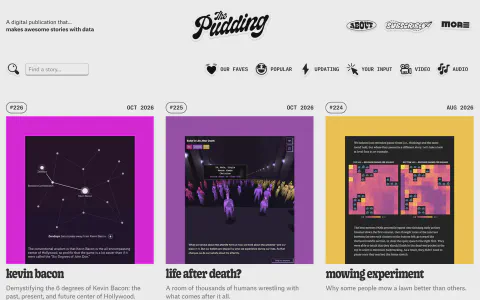
Visual essays on culture and society, built from data, graphics and small experiments. Worth reading for the ideas and worth studying for how each one is built.
pudding.cool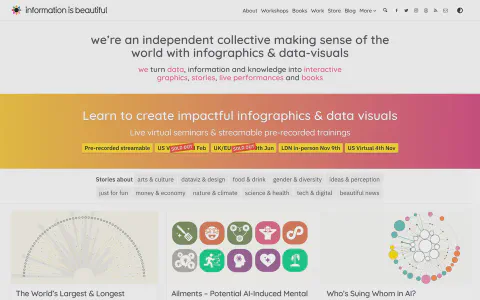
Big, careful infographics that turn a messy subject into one picture. The plastics and recycling one is a good place to start.
informationisbeautiful.net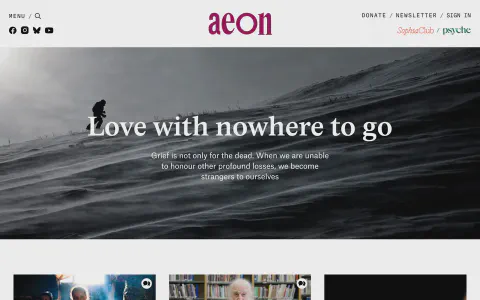
A free magazine of long essays and short films on philosophy, science, history and culture. The kind of reading that doesn't fit in a feed.
aeon.co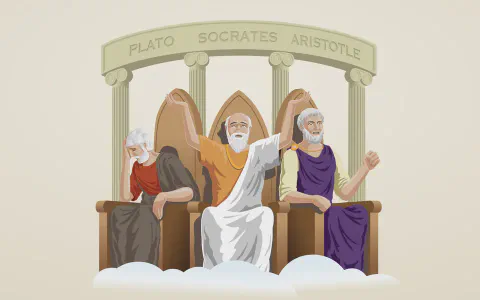
An illustrated deck of common logical fallacies, each with a plain explanation and an example. Quick to read, and hard to unsee afterward.
yourlogicalfallacyis.com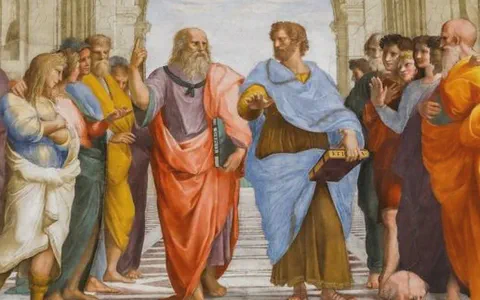
A free beginner's course in classical, Aristotelian logic: how arguments are built and how to tell a good one from a bad one. A natural companion to my Basic Logic chapters.
aristotelianlogic.com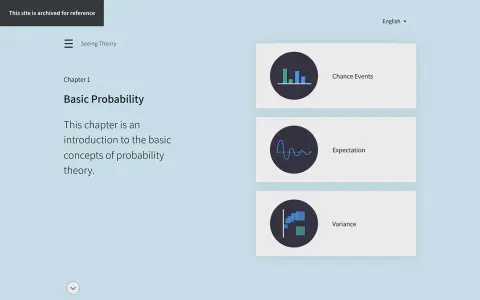
Brown University's visual introduction to probability and statistics, where every idea is a simulation you can poke.
seeing-theory.brown.edu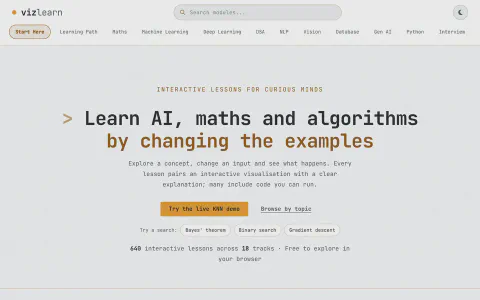
Free, in-browser visual explainers for machine learning, algorithms and the math under them, organized into tracks. No sign-up.
vizlearn.in
A free, hand-gathered library of books, courses, papers and documentaries across science, history, philosophy and the arts, for learning sideways.
pol.polaimath.comHilary Layne's graded reading list for building literacy, from chapter books up to advanced classics and a shelf on grammar. Most titles link to free copies, and the list itself is a free PDF. It pairs well with my book clubs guide.
hilarylayne.com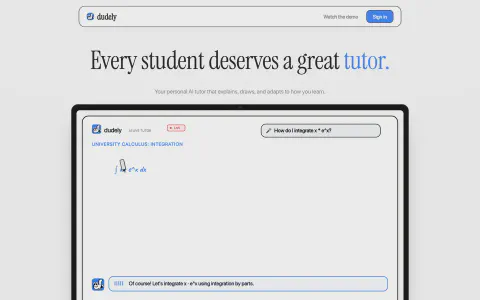
An AI tutor that works a problem on a live whiteboard, writing and drawing the explanation step by step. Math, physics, chemistry and engineering.
dudely.co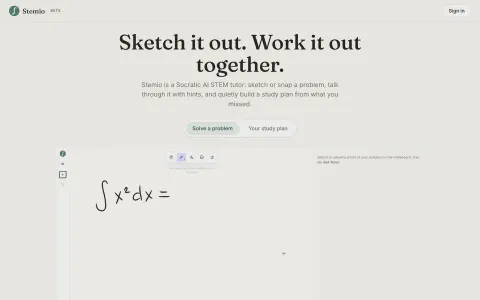
A Socratic AI tutor for STEM: it asks guiding questions and gives hints instead of handing over the answer.
stemio.ai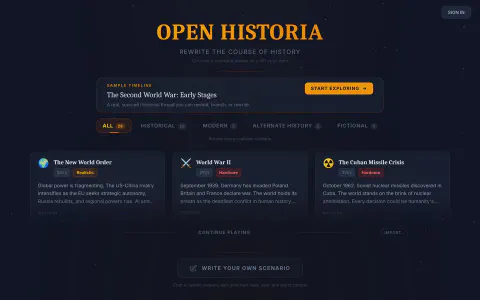
A grand strategy game where you give a civilization orders in plain language and an AI game master decides what happens. History as a sandbox.
historia.aliveville.com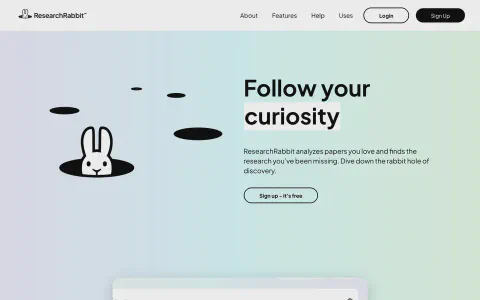
Maps academic papers as a web of citations, authors and related work, so a literature review starts from a picture instead of a search box.
researchrabbit.ai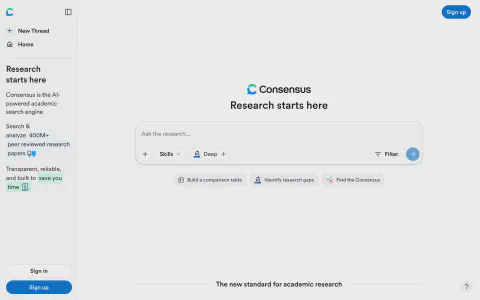
A search engine over academic papers that answers with what the evidence says, with citations.
consensus.app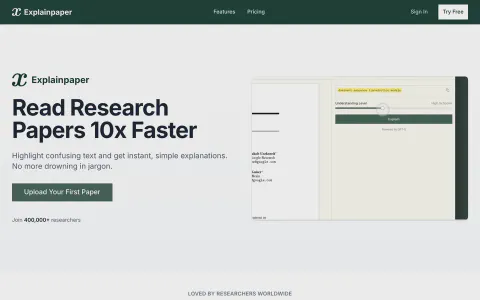
Upload a paper, highlight the part that lost you, and get it explained in plainer words.
explainpaper.com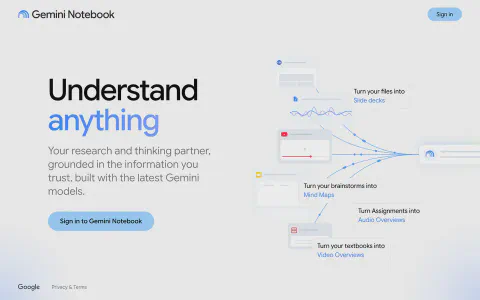
Google's AI workspace for your own sources: drop in documents and ask it to summarize, compare and pull out what matters.
notebook.google.com